You Don't Have to Rent Your Intelligence: The Case for Owning AI Inside Your Walls
Most energy companies believe they face a single choice about AI: which vendor to rent it from. Sign up for the AI lab’s enterprise tier, or buy the big cloud provider’s AI suite. Pick a subscription, point it at your data, and hope the security team signs off.
That framing is wrong, and it is quietly expensive. It hands the most strategic capability your company will adopt this decade to a third party, priced per seat, hosted on someone else’s infrastructure, improving on someone else’s roadmap. There is a better path, and it is now well within reach: own your AI capability internally, built on open models, running inside your own environment, with our help.
This is what we mean by AI sovereignty. And the reason it is suddenly practical comes down to one shift almost nobody outside the field has fully absorbed.
The models became a commodity
For three years the industry told a simple story: intelligence lives in the frontier model, so pick the smartest one and rent access. That story is now out of date.
Stanford’s 2026 AI Index put a number on it. The performance gap between the top ten AI models narrowed from 11.9% to 5.4% in a single year. The pack has converged. The difference between the most expensive proprietary model and a strong open-weight one — the kind you can download and run yourself — is now a rounding error for the vast majority of real business tasks: reading documents, answering questions grounded in your data, summarizing, drafting, retrieving the right procedure at the right moment.
If the intelligence itself is roughly equivalent and freely available, then the thing you are paying a premium subscription for is not intelligence. It is convenience, and lock-in. You are renting something you could own.
The value was never in the model
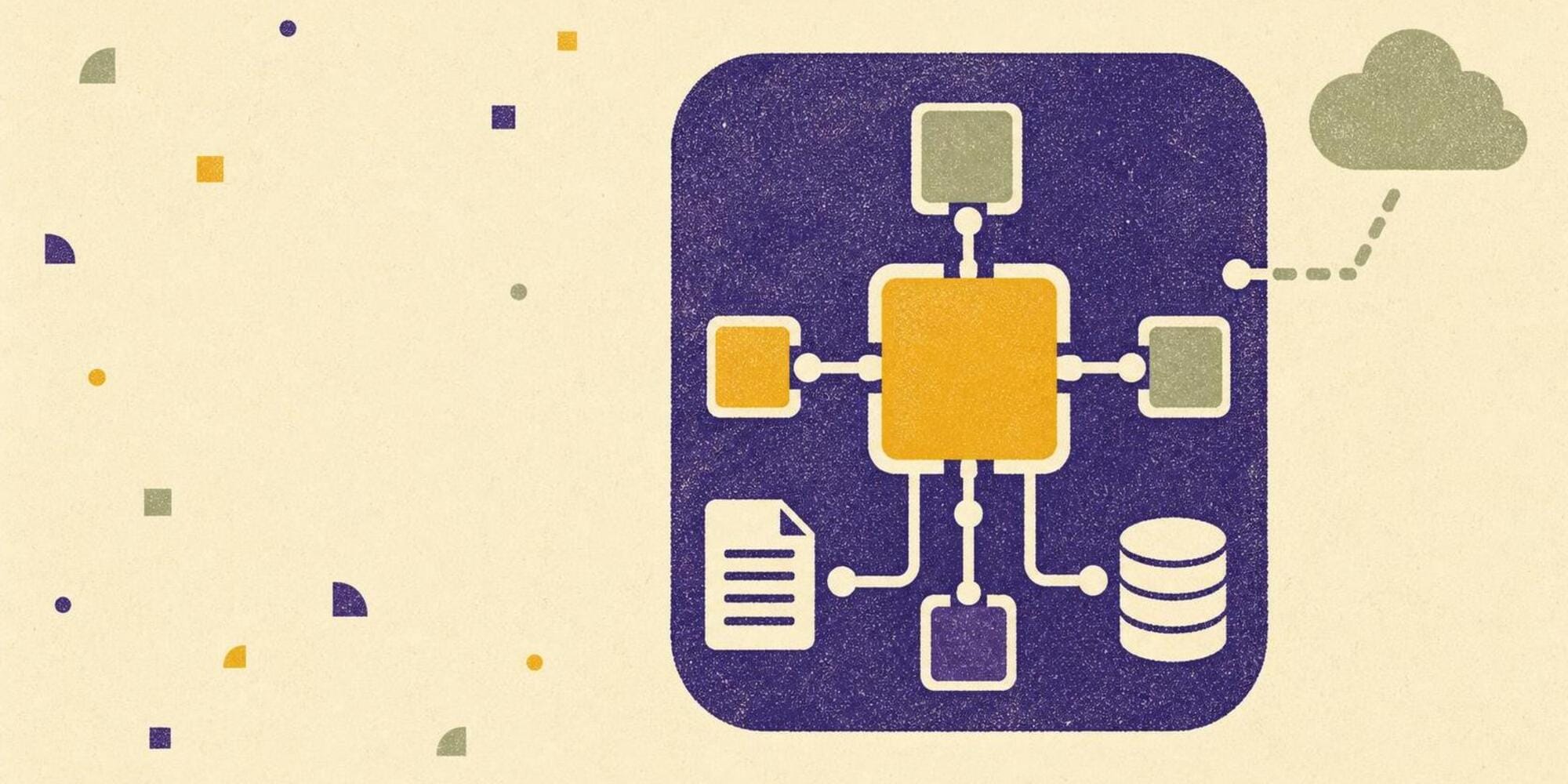
Here is the part that changes the strategy. A useful AI system is not a model. It is a model wrapped in everything around it: the connection to your data, the retrieval that finds the right information, the permissions that keep people from seeing what they shouldn’t, the audit trail, the guardrails, the workflow it plugs into. In the field this surrounding layer has a name — the harness. The model is the smallest, most interchangeable part of it.
That is a liberating realization for an energy company. The model is a commodity you can swap. The harness is the durable asset, and it can be yours. It encodes how your business actually works — your data, your access rules, your compliance posture, your operational context. Built once, it keeps its value even as the underlying models improve, because you can drop in a better model whenever one arrives without rebuilding the thing that surrounds it.
Rent the whole stack from a lab or a cloud suite and you own none of that. Every improvement, every price change, every policy shift is theirs to make. Own the harness and the models become a competitive market you shop in, not a landlord you answer to.
What sovereignty actually buys you
Owning your AI internally is not an ideological position. It pays off in four concrete ways that matter specifically to energy operators.
Your data never leaves. Open models run inside your own environment — your cloud tenant, your on-premise hardware, your network. Settlement data, SCADA readings, contracts, and market research stay where they already live, under the controls you already trust. There is no egress to a third-party lab, which is the single question that stalls most enterprise AI projects before they start.
Your costs bend down over time, not up. Per-seat subscriptions scale linearly with adoption — the more useful the tool becomes, the more you pay, forever. An owned capability built on open models looks more like software you run than a meter that runs against you. As open models improve and get cheaper to operate, your cost curve improves with them.
Your governance is yours to enforce. Access control, human-in-the-loop checkpoints, audit trails, documented decisions — these are not features you wait for a vendor to ship. They are built into the harness you own, tuned to how your compliance and operations teams actually work.
Your independence compounds. You are not betting the company’s AI future on a single lab’s pricing, availability, or strategic direction. If a better open model lands next quarter, you adopt it. If a vendor changes terms, it doesn’t touch you.
“Own it internally” does not mean “build it alone”
The objection we hear is fair: energy companies are not AI shops, and staffing a team to stand this up from scratch is not realistic. It doesn’t have to be. Owning the capability and building it yourself are two different things.
This is the work we do. We build the harness inside your environment, connect it to your systems and data, and set up the governance layer so every step in and out passes through controls you define. We operate and improve it as a managed service for as long as that’s useful — and because it lives in your environment and belongs to you, you are never locked into us either. The capability is yours. We are how you get there without hiring a lab.
And you don’t start at the deep end. The first step is deliberately low-risk: a read-only system that answers questions grounded in your own documents. Immediate value, nothing autonomous, nothing exposed. From there you grow the capability at your pace, on your terms — because you own it.
The choice, restated
The real decision in front of energy leaders is not which AI vendor to sign up with. It is whether AI becomes another line item you rent forever from a lab you don’t control, or a capability you own inside your own walls — built on models that are now a commodity, wrapped in a harness that encodes how your business runs, governed the way you require.
The models are no longer the hard part, and they are no longer the moat. Ownership is. You don’t have to rent your intelligence.
Ready to see what owning it looks like?
If you want to see what owning this internally looks like for your operation, we run a short Discovery Workshop — no commitment, no sales pitch. We’ll map where a low-risk first step fits in your environment. Book a Discovery Workshop.